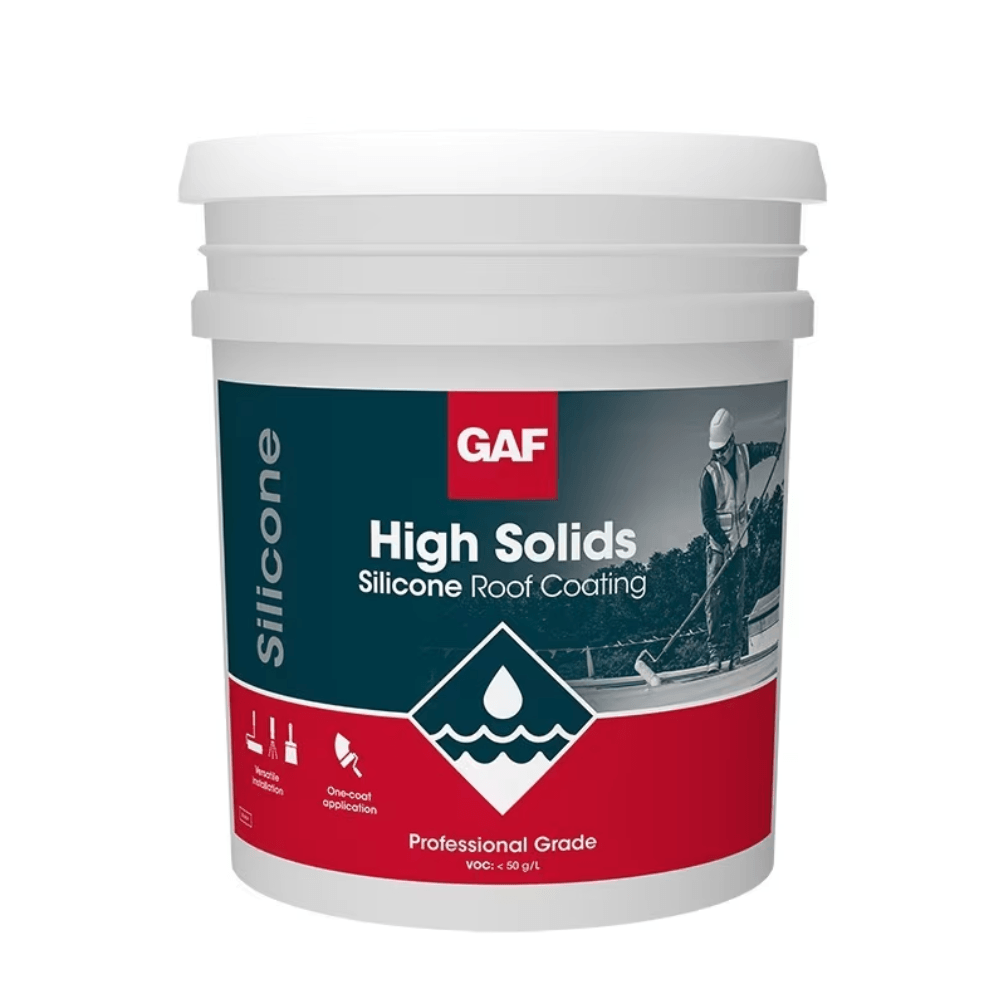
It’s your go-to solution for commercial flat roof restoration. Instead of paying for an expensive, disruptive roof tear-off, you can apply this coating to waterproof aging substrates like metal, TPO, or EPDM. It instantly seals leaks and locks out the elements with a durable, seamless membrane.
Nope, and that is where you’ll see massive labor savings. Because of the heavy, high-solids formula, crews can hit the required mil thickness in a single pass. You get the full waterproofing protection of a standard multi-coat system without paying your team to walk the roof twice.
Absolutely. This is the main reason contractors choose silicone over acrylics. Because silicone is completely inorganic, it doesn’t break down when submerged. It forms a permanent, watertight seal that easily handles permanent ponding water on low-slope roofs without chalking, washing away, or losing adhesion.
Not at all. Traditional acrylic coatings dry out, chalk, and flake under heavy UV exposure, but high-solids silicone is engineered differently. It cures into a rubber-like membrane that stays permanently flexible. It expands and contracts with the roof, ensuring it won’t crack, peel, or degrade over time.
Yes, it’s a massive energy saver for commercial buildings. The bright white finish acts as a mirror, physically bouncing harsh UV rays away from the roof. This drastically drops the surface temperature, significantly reducing interior cooling loads and giving your HVAC system a much-needed break during summer.
Yes, you’ll definitely want to put down a primer first. The oils found in asphalt and modified bitumen can easily bleed into white silicone, turning it yellow or brown. A good primer locks those oils in, ensures proper adhesion, and keeps your new coating bright and highly reflective.