The marine environment is one in which infrastructure and equipment requires special attention, particularly with respect to corrosion. It doesn’t matter if you are talking about concrete or metal, when subjected to conditions that accelerate deterioration, such as salt water, humidity, or UV radiation, they can degrade. The answer is protection, preventing electrochemical and/or galvanic corrosion from destroying docks, buoys, or ships.
This can be achieved with marine industrial coatings. Their service life is extended and maintenance costs are reduced. The greatest high-performance systems will be discussed below, along with the reasons that choosing them can have a big influence.
How Saltwater and Marine Environments Cause Corrosion
To choose the right protection system, it is necessary to understand how corrosion occurs in marine environments. What causes this corrosion of metals? Saltwater and humidity, among other things.
The Role of Salt, Moisture, and Oxygen in Metal Corrosion
Corrosion is due to the interaction of metal with oxygen and moisture. It’s an electrochemical process that can be accelerated in the ocean. Water contains chloride ions that impact the surface of materials, and they create little defects that slowly degrade the surface.
Over time, natural protective layers degrade (unless they are coated). As a result, rust spreads. In turn, rust causes corrosion, which can be very damaging to all structures—and even more so to marine ones.
Preventing this is easy, as long as you use the appropriate protective gear. The goal is not to eliminate the natural agents that can damage the structure, but to add an extra layer to the natural one. This is what marine corrosion protection systems do, creating a natural barrier between the material and the corrosive elements.
Splash Zones, Tidal Zones, and Full Immersion: Why Location Matters
Areas within a marine facility are subject to varying conditions. Indeed, an asset’s location determines the degree of exposure and the required coating. Specifically:
- Splash zones: These are the most aggressive areas, due to constant cycles of wetting and drying. If you don’t use splash zone coatings, the deterioration will accelerate.
- Partially submerged areas, prone to corrosion.
- Fully submerged areas, with a high risk of constant corrosion.
Each area is unique and requires different protective measures.
Abrasion, UV, and Biofouling as Secondary Threats
Other factors that can affect the durability of marine materials include:
- Natural wave abrasion causes wear on surfaces.
- UV radiation causes color loss and even cracking over time.
- Biofouling consists of marine organisms that can reduce operational efficiency.
These factors can act simultaneously. This is why it is so important to use specific coating systems to provide long-term protection for the structure.
Types of Industrial Coatings Used in Marine Applications
At this point, it’s important to understand exactly what each coating is used for. While we at Bowers Industrial can advise you on whatever you need, this table will help guide you in making important decisions:
|
Coating Type |
Primary Function |
Key Benefits |
Common Applications |
|
Marine-Grade Epoxy Coatings |
It is characterized by forming a protective barrier that is highly effective against moisture and various chemicals |
It has excellent adhesion, as well as high mechanical strength. It also provides excellent long-term protection against corrosion. |
It is widely used on metal surfaces in general, but also on concrete surfaces located in marine environments where they are submerged. |
|
Zinc-Rich Primers |
Thanks to a sacrificial anode, they provide galvanic protection. In other words, the zinc corrodes, not the structure. |
It prevents the steel from rusting and extends the service life of the metal substrate. |
You can find it primarily in port structures and offshore platforms. It is also used in pipes operating under extreme conditions. |
|
Polyurethane and Polyaspartic Topcoats |
They act as a topcoat, protecting the surface from external agents. |
They offer high resistance to UV rays, which are present in marine environments. They also resist abrasion, as well as aesthetic issues (loss of gloss and discoloration). |
They are widely used on ships, multilayer systems, and coastal structures. |
Let’s take a closer look at each one.
Marine-Grade Epoxy Coatings
Generally, “marine-grade” epoxy coatings are an excellent solution. Among their main advantages are excellent resistance to water (making them perfect for marine environments) and to chemicals themselves.
When applied, they create a high-density barrier. This provides optimal protection for both metal and concrete surfaces, which are common in marine environments.
Zinc-Rich Primers and Galvanic Protection
Zinc-rich primers employ a mechanism that is particularly useful in these cases, known as “galvanic protection.” This refers to a situation in which the zinc acts as a “sacrificial anode,” corroding before the underlying metal substrate does. This helps prevent structural damage.
Polyurethane and Polyaspartic Topcoats
Both polyaspartic and polyurethane finishes can be applied in multi-layer systems to provide the structure with complete resistance. They maintain a uniform appearance over time.
How to Match the Coating System to the Exposure Zone
Not all coatings are suitable for the same purpose. These include the substrate, the level of exposure, operating conditions, and regulatory requirements. For example, a system designed for a zone of constant immersion will not work in a splash zone. The same applies to a structure subject to constant traffic, which will require wear resistance.
Protecting Specific Marine Equipment and Structures
Every application has its own challenges and unique characteristics. For this reason, it is important to know how to choose the right protection system.
Boats, Hulls, and Watercraft
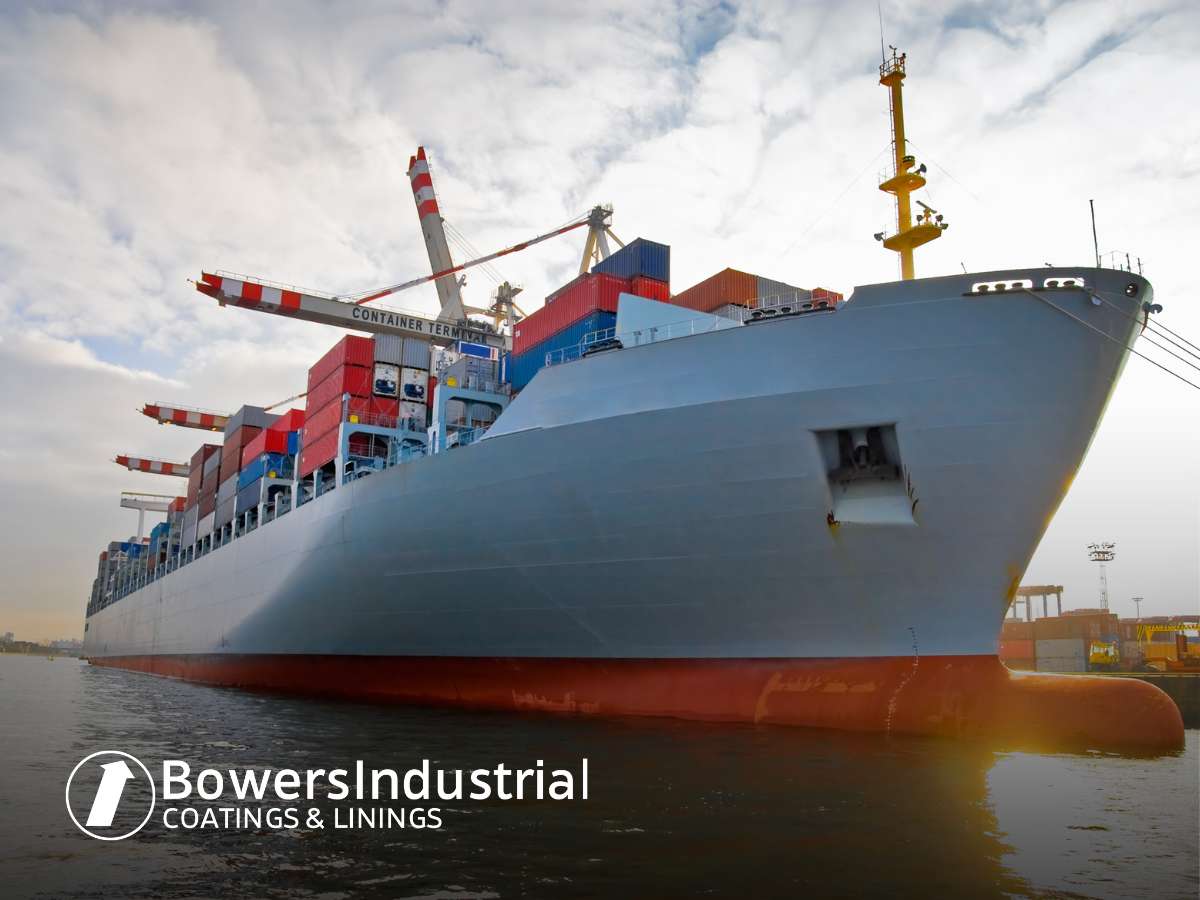
All boats are exposed to water, impact, solar radiation, and abrasion. To prevent corrosion, hulls and metal components must be protected.
In this regard, modern coatings for boats and docks maintain the integrity of these surfaces. They extend the boat’s service life and preserve the value of the investment.
Buoys and Flotation Devices
Buoys and any associated flotation devices play a particularly important role in maritime safety. Their functions include warning of hazards, guiding vessels, and even delineating safe and unsafe areas. To function properly, they must be protected against the types of damage mentioned earlier in this article.
It is best to use coatings approved according to ASTM standards and also approved by the Coast Guard.
Key Benefits of Coating Marine Equipment
Coatings can be extremely beneficial in the marine environment. Corrosion is the number one enemy of marine equipment and structures, such as buoys, boats, and hulls. Discover the benefits of protecting marine equipment coatings:
Extended Service Life and Lower Replacement Costs
Industrial coatings are your best ally for keeping your assets in top condition for longer. Corrosion leads to a decline in functionality. The result? The need for replacements that could have been avoided. By investing in specialized coatings, you’ll end up saving more money.
Improved Safety and Regulatory Compliance
Among the main advantages of coatings for marine equipment is compliance with standards. The most important of these are those set by the U.S. Coast Guard and ASTM International. All of these standards need to be followed to avoid long term risks and ensure that the equipment does not structurally fail.
Reduced Maintenance and Downtime
Whenever possible, emergency repairs should be avoided. Especially in marine environments, they can be costly and cause significant disruptions to operations.
By implementing preventive programs using industrial coatings for marine equipment, it is possible to reduce downtime. Rather than simply reacting to problems, organizations can take a proactive approach to minimize downtime.
Frequently Asked Questions About Marine Industrial Coatings
Below, we address common questions about the use of industrial coatings in marine environments:
What is the best coating for saltwater exposure?
There are no one-size-fits-all solutions. In reality, the best option always depends on the material chosen, as well as the level of exposure and operating conditions. Keep in mind that marine-grade epoxy systems are typically one of the most commonly used options for saltwater environments.
How long do marine coatings last?
The lifespan of marine coatings can range from several years to over a decade. The duration depends on the quality of the system, surface preparation, and environmental conditions.
What coating systems best prevent galvanic corrosion on industrial marine equipment?
Multi-layer systems that combine zinc-rich primers, epoxy layers, and UV-resistant topcoats typically offer excellent protection against galvanic corrosion. They are highly recommended.
What’s the difference between marine paint and industrial coating?
Conventional paints typically focus on aesthetic appearance. In contrast, industrial coatings are designed to provide advanced structural protection. They prevent damage caused by corrosion, abrasion, chemicals, and extreme conditions.
Are marine coatings suitable for concrete structures?
Yes, absolutely. There are specific systems for concrete that help prevent the penetration of moisture, salts, and other contaminants. These can affect the structure’s durability, weakening it over time.
Can coatings reduce maintenance costs?
Definitely. An appropriate protection strategy can significantly reduce the frequency of repairs and replacements. In a way, it’s an investment for your company to avoid unexpected costs down the road.
Protect Your Marine Equipment With Bowers Industrial
The difference between years of reliable and safe performance in the marine environment and costly premature repairs lies in choosing the right protection system.
To avoid problems, it is essential to work with experienced specialists, because each asset can receive the most appropriate solution based on its specific conditions.
At Bowers Industrial, we have over 80 years of combined experience providing high-performance solutions for demanding industrial applications.
Would you like a personalized recommendation for your marine equipment or structures? Contact us now.

Bowers Industrial Coatings & Linings
7681 South 5280 W
West Jordan, UT 84081
Tel: 801-977-0508
Email: [email protected]